
Shai
Goddess of destiny and the span of life, Shai knows the invisible measure of every journey. He does not judge, but guards the thread of becoming and the rhythm of existence. His gaze reflects the mystery of origin and return. To meditate on Shai is to accept one's destiny as a path to wisdom.
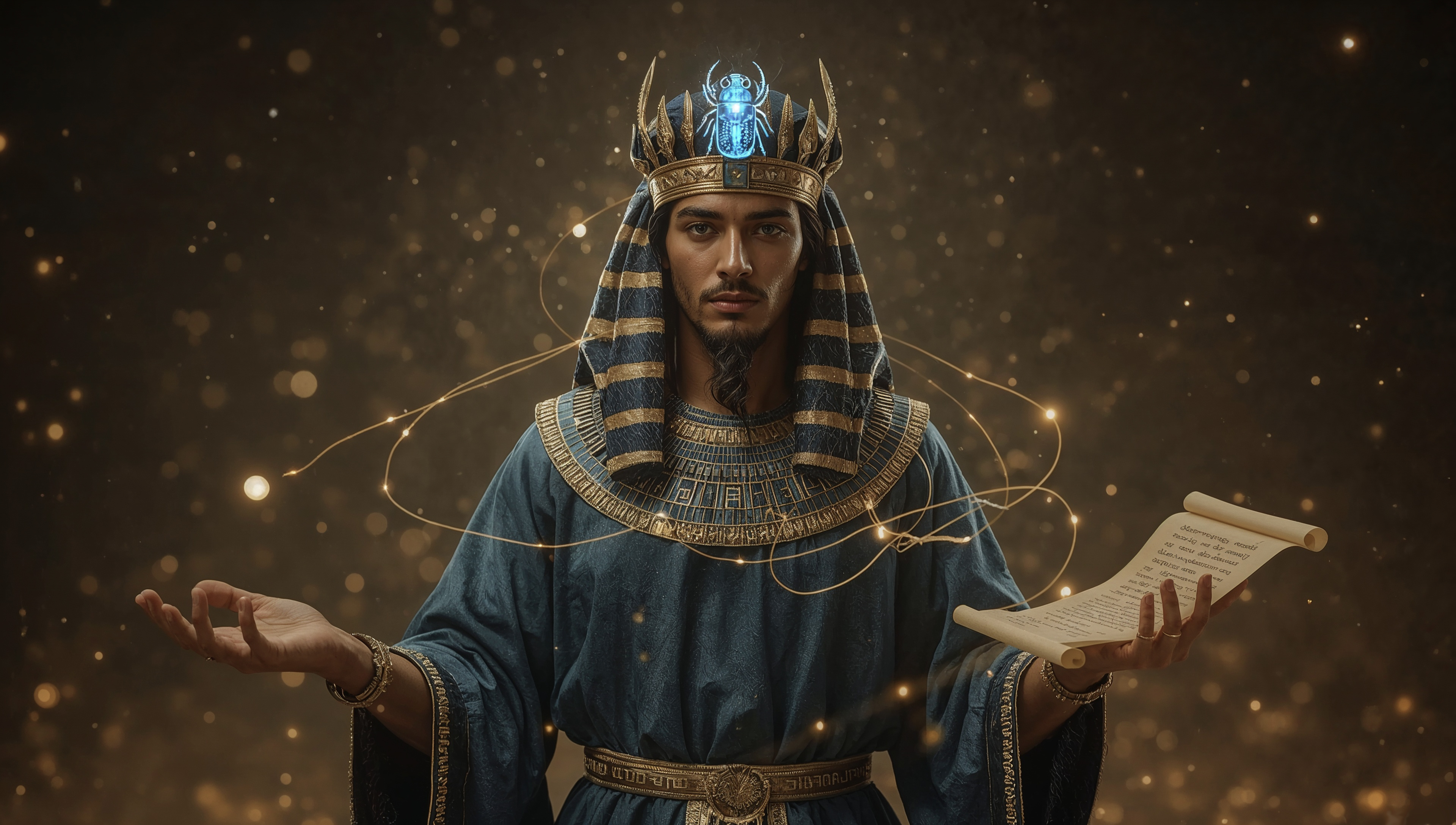
Shai is the personification of destiny and the lifespan of every being.
No one can escape his decree, yet his justice is harmonious, guided by the cosmic order of Maat.
The name Shai derives from the verb šꜣj, meaning “to determine, assign, decree.”
He is not a god of chance, but of cosmic necessity — the natural law that establishes the path of every soul.
In the Pyramid Texts and the Books of the Dead, Shai appears as the one who assigns to each human being their span of life at the moment of birth.
He is often depicted beside Renenutet, the Goddess of Fortune and Abundance, who distributes the gifts of life while Shai sets their limits and rhythm.
Shai is also present in the Judgment of the Soul, where he weighs the fate of the deceased alongside Thoth and Maat.
In some texts, he is called “He who records the day of birth and the day of departure,” guardian of the Book of Time.
In popular worship, Shai was invoked as a protector against misfortune or to obtain a favorable destiny;
but on the initiatory level, he represents awareness of the cycle, the understanding that all things arise and end according to measure.
Esoterically, Shai is the consciousness of time within the soul — the divine aspect that observes its own journey with detachment and harmony.
One who understands Shai does not seek to change destiny, but to live it with clarity and honor, thus realizing the supreme freedom:
union with the cosmic law.