
Hapi
God of water and abundance, Hapi is the sap that nourishes all things. Its flow brings life, balance, and prosperity. It is the force that renews, the song of the eternal river.
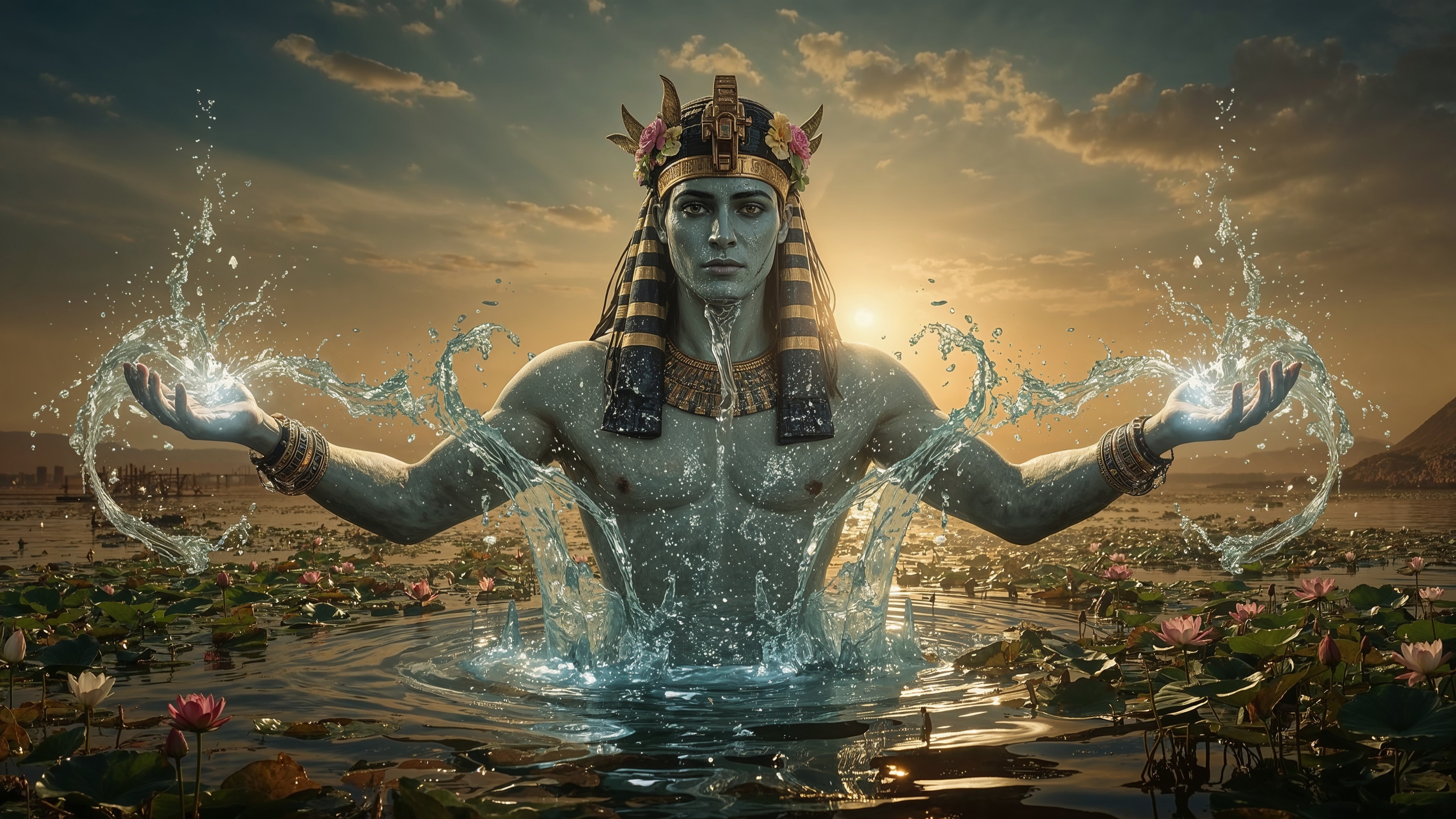
Hapi is the divinity of the Nile and of its annual flood, which brought life and abundance to Egypt.
He is the symbol of fertility, prosperity, and the cosmic balance between the forces of North and South.
He represents life in flow, the divine gift that renews both body and spirit.
The name Hapi (ḥʿpj) means “He Who Flows” or “He Who Fertilizes,” and embodies the vital essence of the Nile.
Without Hapi, there would have been no Egyptian civilization: every harvest, every village, every breath of life depended on his generosity.
The ancients described him as “He Who Comes Mysteriously,” for the rising of the Nile had no visible cause — it was the annual miracle of the universe.
When the waters rose, the Egyptians celebrated Hapi with songs, offerings, and processions of thanksgiving, recognizing in him the beating heart of divinity within nature.
Hapi is depicted as an androgynous man, with a strong and fertile body, full breasts, and a rounded belly — symbols of abundance and the union of masculine and feminine principles.
Upon his head he wears lotuses of the South or papyrus of the North, depending on the region, and often holds vases from which water flows, representing the two branches of the Nile that nourish the land.
In sacred thought, Hapi is not merely a natural deity, but the universal principle of vital flow — the energy that unites spirit and matter, transforming physical water into the spiritual force of regeneration.
He embodies the fluid breath of the world, the power to renew itself cyclically and to maintain balance between giving and receiving.