
Anubi
Master of transitions and protector of the subtle worlds, Anubis accompanies the soul through sacred passages. With his guidance, fear dissolves and understanding of the mystery arises. It is his presence that brings peace in change.
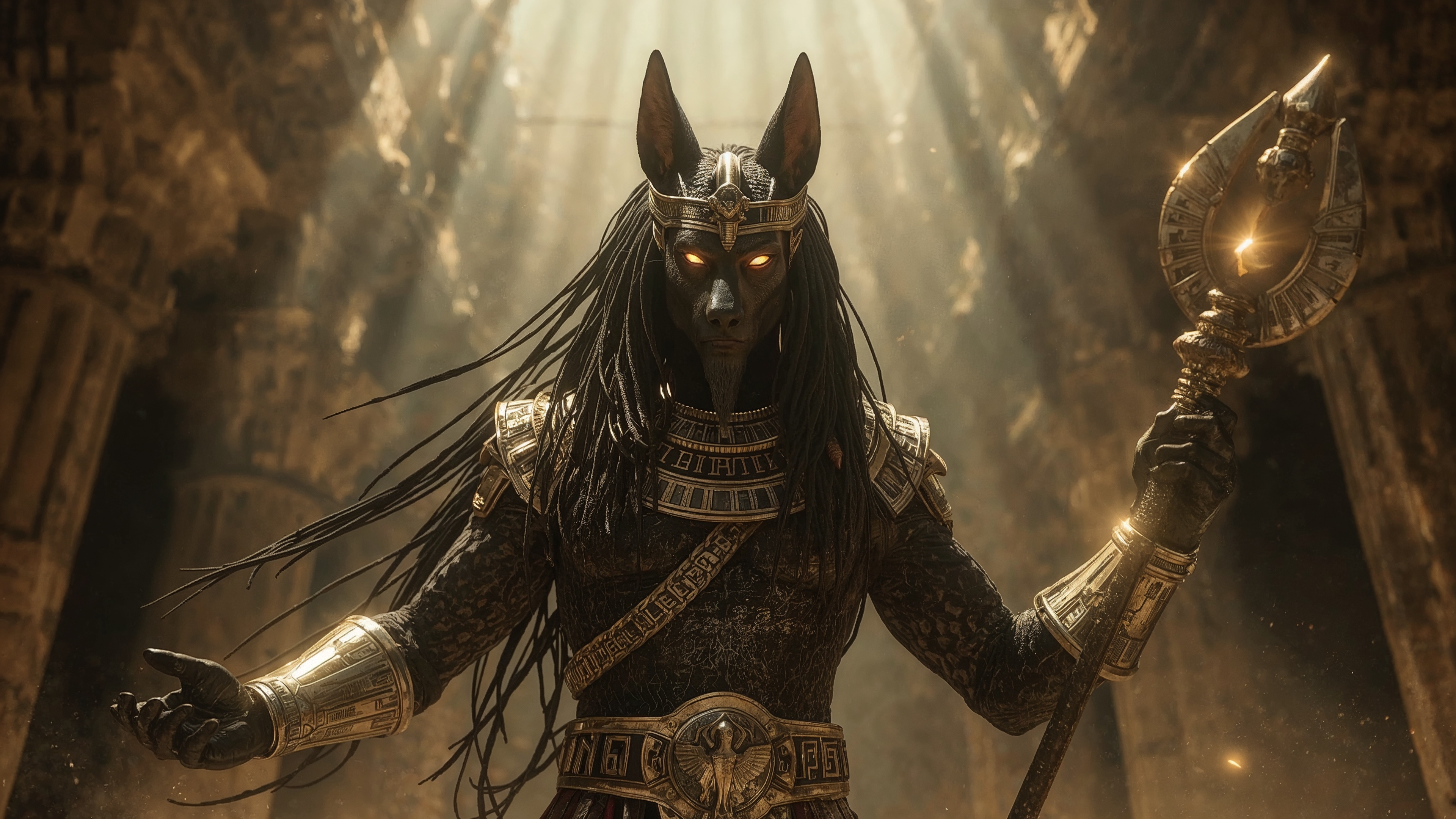
Anubis (Inpu or Anpu in the language of Kemet) is one of the oldest and most venerated deities of Egypt.
He is the guardian of thresholds, the lord of necropolises, and the master of embalming — the one who presides over the transformation of the body into an immortal vessel.
Depicted with a human body and the head of a black jackal, Anubis embodies the principle of transition, the force that guides the soul from the visible world to the invisible.
The color black, associated with the fertility of the Nile and the renewal of the earth, symbolizes spiritual regeneration.
In the earliest ages, he was sovereign of the realm of the dead, a role later shared with Osiris, of whom he became the faithful servant and devoted son — born from the secret union between Nephthys and Osiris.
According to the Book of the Dead, Anubis weighs the heart of the deceased on the Scales of Maat, to determine the purity of the soul and its right to enter the Fields of Light.
But his power is not limited to death:
he is also the one who opens the way in rituals of passage, rebirth, and spiritual healing.
In the Mysteries of Kemet, the invocation of Anubis was used to guide the priests through the planes of the afterlife and to recover the inner Light.